Learn more

Morgan Freeman may have been talking about the entertainment industry when he said, "As you grow in this business, you learn to do more, with less." But these valuable words work for all businesses.
Irrespective of the nature and style of your business, as you grow bigger and expand, you have to make the best of the resources at hand to deliver huge results. Businesses that adapt to this challenge and take the help of a resource scheduler thrive, while others get lost in the melee.
So, coming to the big question: How can you get more work done with fewer hands? Here, in this blog, you can find some great tips on how to get the most from your resources, without risking your team burning out.
When you have limited resources, the key to being successful in a project is to utilize them in the best way possible. Make sure that you are aware of the strengths, skills, and weaknesses of all members of your team so that you can match them to the right tasks.
Very often, businesses rely on spreadsheets for resource allocation and management. While spreadsheets may be simple and easy to set up, one of the biggest drawbacks of this method is that they don't scale well as your team grows.
Additionally, taking a manual approach to resource management is not only labour-intensive but also has several other drawbacks, like inaccurate and stale data, unrealistic views of capacity and demand, lack of real-time data, and more. While allocating resources, there are plenty of factors to consider, like vacation time, leaves of absence, and the resource availability for this project and so on.
The best way to get all these variables in one place is to invest in effective resource management software. The software helps you take an integrated approach to resource allocation and planning.
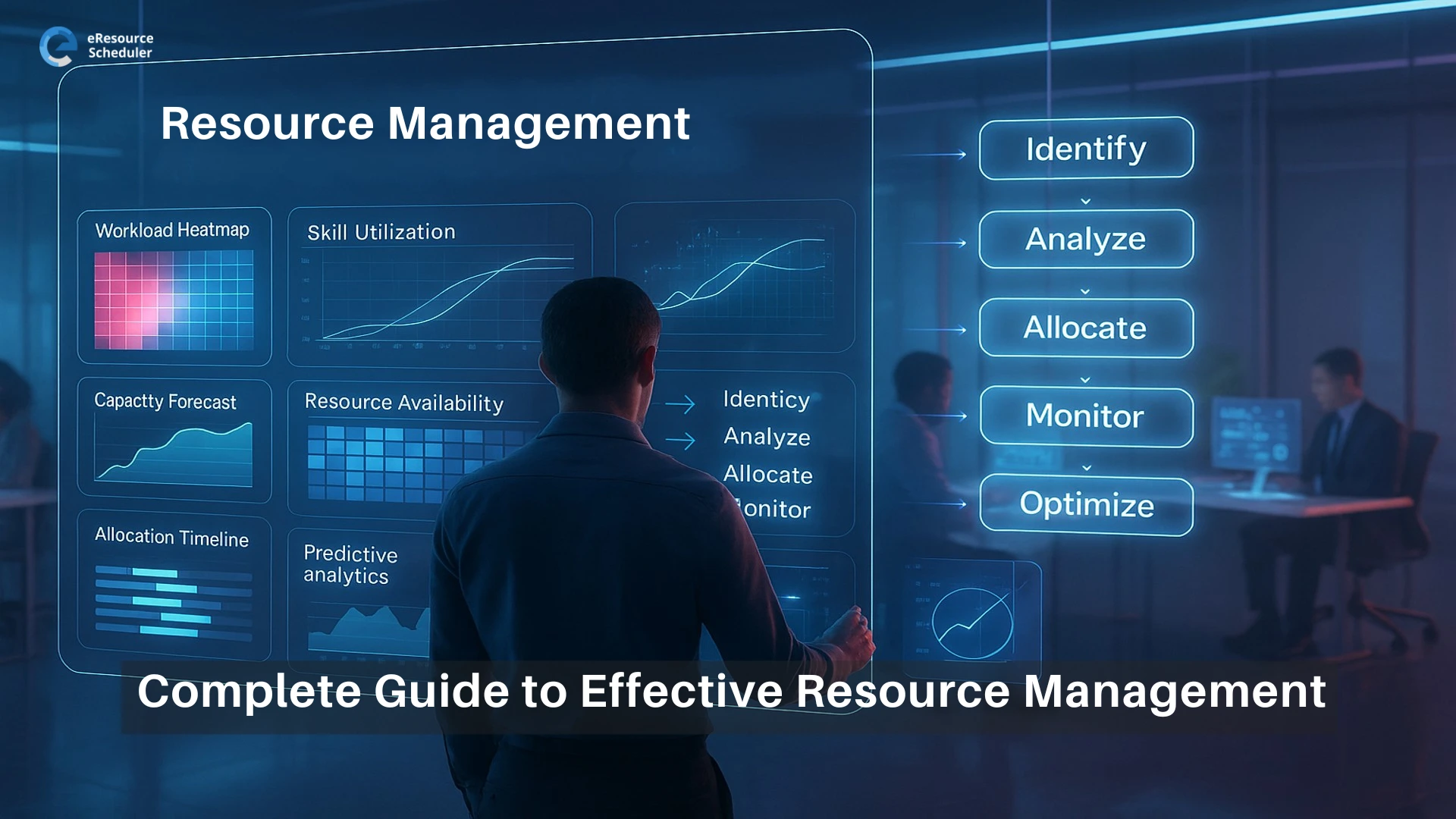
Now that you have a dedicated resource management tool or software in place, here are some of the top tips to help you get more work done, with the few resources available.
The 80-20 Rule works here. Very often, you can find that 80% of resource constraints come from 20% of your team. These are the people who are in high demand and work on multiple projects at the same time.
Start by allocating these resources first. This helps you plan other lesser-demand resources around the availability of high-demand resources. This is a great strategy to avoid unnecessary delays and bottlenecks.
You may assume that once you have allocated resources for a project, your work in resource management is done. However, this isn't the case. Resource management and allocation are ongoing processes that continue throughout the project timeline.
There are bound to be conflicts due to unexpected delays and unavailability of key resources, and changes in resource allocation are inevitable. Make sure that you work with other management team members to resolve conflicts and continue with the tasks on hand.
For formally defined tasks, make sure that you specify start/finish dates and duration to each team member. For other lightweight assignments that don't take much time, you can skip the formal lists and provide team members with just the due date.
Wherever possible, try to automate these processes to reduce admin time. Most resource management software lets you automate repeated processes, thereby helping you save valuable time.
Here are a few tips for effective planning, especially when you are dealing with resource shortages:

The most successful teams don't just plan, but they forward plan. This is possible because they anticipate and plan resources for future tasks.
Forward planning has two main advantages:
Work prioritization is essential, especially when you have limited resources. This is because, with prioritization, you don't just do work, but work on the right things. Make sure that your team is aware of the priorities so that they can focus on what's important and not get sidetracked by less important projects.
At the very start of the project, when you are looking at long-term planning, assign unnamed, role-based resources instead of assigning specific team members. Start soft-booking resources during the prioritization stage. You can finally schedule resources when you are looking at short-term goals and have all the detailed information about the project.
Not all team members are ready for time reporting. So, keep it simple and easy, especially when you are getting started. Once the team members get into the groove of time reporting, you can further refine it. Use the data from timesheets to evaluate and understand resource performance, so that it can aid with future planning.
In time tracking, it's also essential that you monitor non-project time like time spent on administrative tasks, breaks, lunches and so on. This helps you to get a realistic view of the time required, thereby optimizing future resource allocations.
While multi-tasking may seem like a great idea on paper to get the most out of your resources, it often results in lower productivity. Try to reduce the number of parallel tasks for each resource, thereby helping them focus better on the tasks at hand.
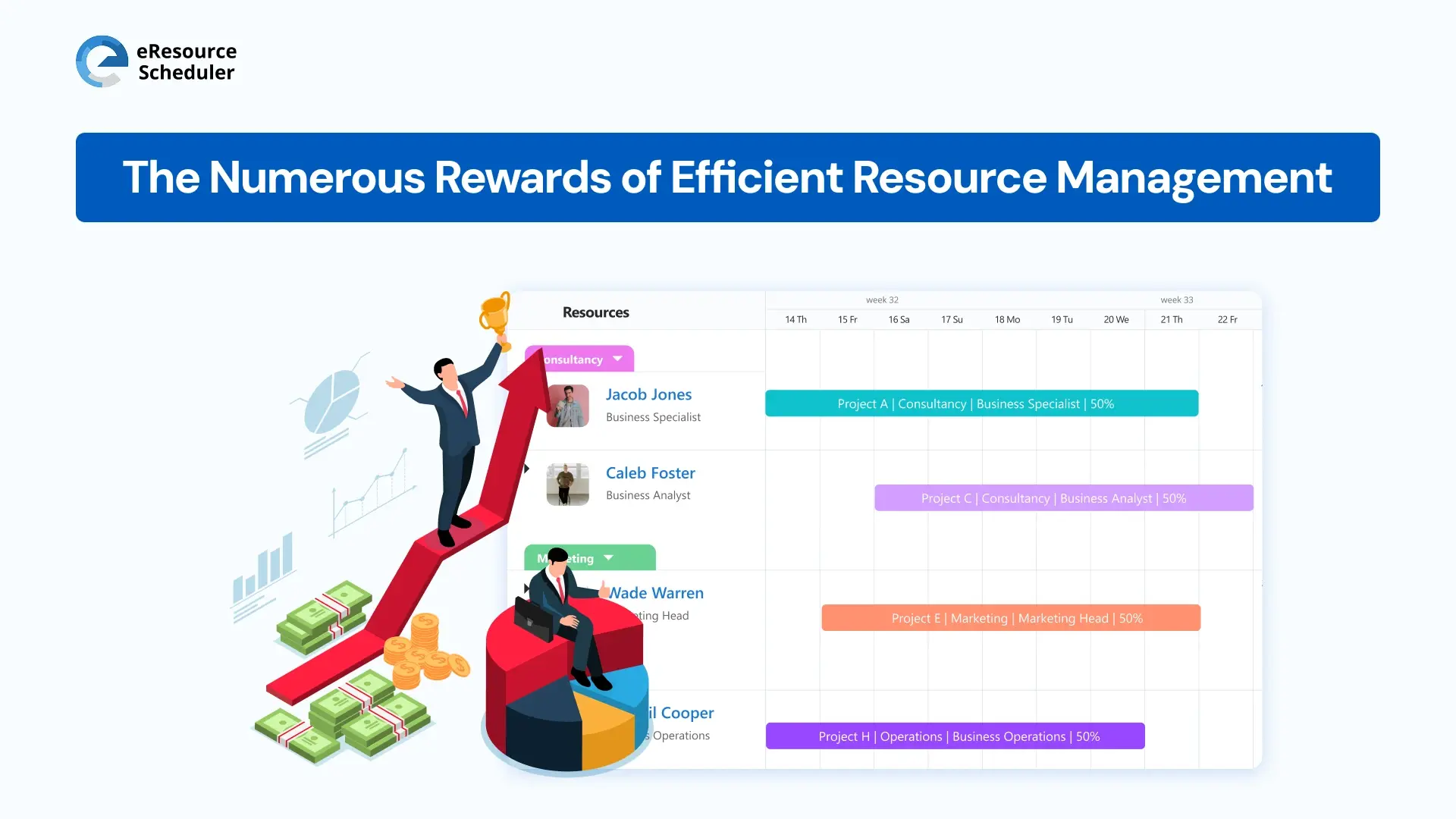
Efficient resource management for professional services directly impacts revenue, margins, and client trust. When capacity is visible and demand is forecasted accurately, leadership moves from reactive resourcing to intentional delivery. Teams spend less time reshuffling workloads and more time executing billable work. The impact shows up quickly in higher utilization, predictable delivery, and stronger client outcomes.
It also brings discipline to growth. With structured resource management for professional services, firms gain clarity on who is available, who is overextended, and where skills are underutilized. Projects stay on track, budgets remain intact, and scope risks surface early. This alignment turns delivery operations into a profit lever rather than a cost center.
The right resource management system transforms best practices into daily execution, enabling firms to scale without delivery chaos. Leaders gain confidence in forecasts, teams gain clarity in priorities, and clients experience consistency. In organizations, that consistency is the real differentiator.
Get full access to powerful resource management with a 14-day free trial of eResource Scheduler.
1. What is resource management in project management?
Resource management is the process of planning, scheduling, and allocating people and skills to project work. It ensures the right resources are available at the right time without overloading teams.
2. Why is resource management important for growing businesses?
As businesses scale, limited resources can quickly become bottlenecks. Effective resource management improves utilization, prevents burnout, and keeps projects on time and within budget.
3. What are the biggest challenges in resource management?
Common challenges include lack of visibility into capacity, manual planning using spreadsheets, and frequent resource conflicts. These issues often lead to delays, cost overruns, and inefficient workloads.
4. How does resource management software improve productivity?
Resource management software provides real-time visibility into availability, workloads, and demand. This enables better planning, faster decision-making, and more efficient use of resources.
5. Can resource management help reduce employee burnout?
Yes, proper resource management balances workloads and limits excessive multitasking. This helps teams stay focused, productive, and engaged over the long term.


Plan Smarter. Schedule Faster. For Free.
Join thousands already using eResource Scheduler to align teams, time, and tasks seamlessly.
 ALL FEATURES INCLUDED