Learn more

In 2026, project delivery is not about who works hardest. It is about who uses people, time, and budget with intent. If your team is still juggling spreadsheets and last minute favors, your resource allocation is quietly deciding which projects succeed and which ones drag.
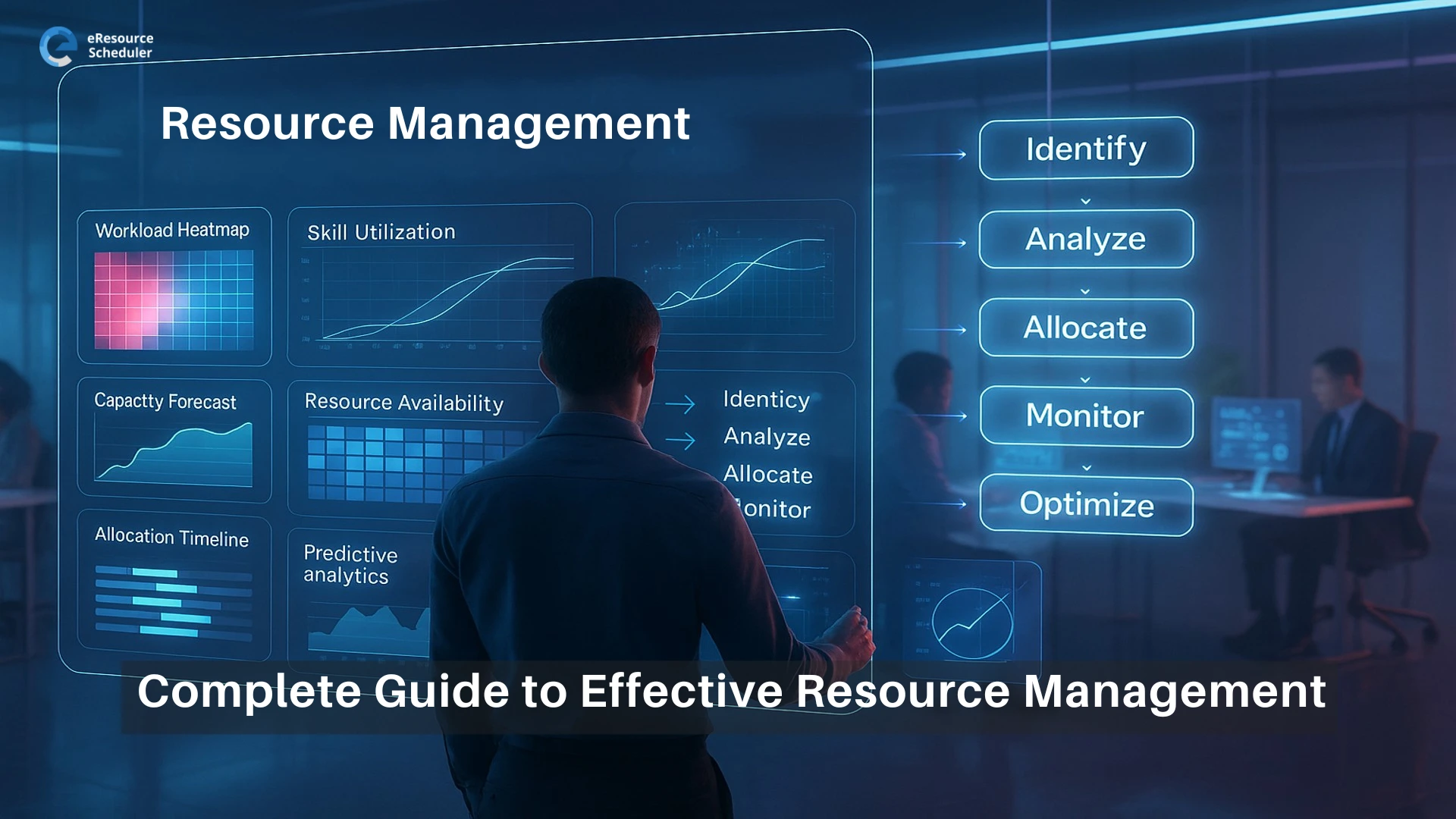
Modern teams increasingly rely on resource management software to see who is free, who is overloaded, and what the next few weeks actually look like. Get that part right and deadlines feel steady instead of fragile.
Before we talk about how it affects project delivery, it helps to be clear on what resource allocation actually means in day to day work.
Resource allocation is the way you decide which people, skills, and budget will work on which tasks and when. In real life it looks like this.
1. You list the work that needs to be done.
2. You match each task with the right role and skill
3. You check real availability instead of assuming everyone is free.
4. You schedule that work on a realistic timeline.
In 2026 this is no longer a plan that lives in a file and never gets touched. Remote and hybrid teams deal with shifting priorities, shared specialists, and sudden client requests. That means allocation has to be something you review regularly, not a one off exercise. When teams treat it as an ongoing habit, project delivery feels calmer, communication improves, and people stop hearing surprise deadlines in status calls.
Once the plan is signed off, everyone talks about timelines and scope. In reality, it is resource allocation that quietly decides whether those promises hold or slip.
When project resource allocation is thoughtful, the classic project triangle stops feeling like a theory and starts acting like a guardrail.
That is how deadlines become realistic rather than optimistic. Work lands with the right person the first time, which reduces rework and surprise overtime. The budget also behaves better because hours are not wasted on stop start handovers or last minute contractor fixes.
On the surface, good resource allocation looks like clean charts and tidy schedules. On the ground, it feels like this.
Team members feel more in control of their week, and project managers spend less time apologizing for delays that were obvious from the moment the wrong people were booked on the wrong tasks.
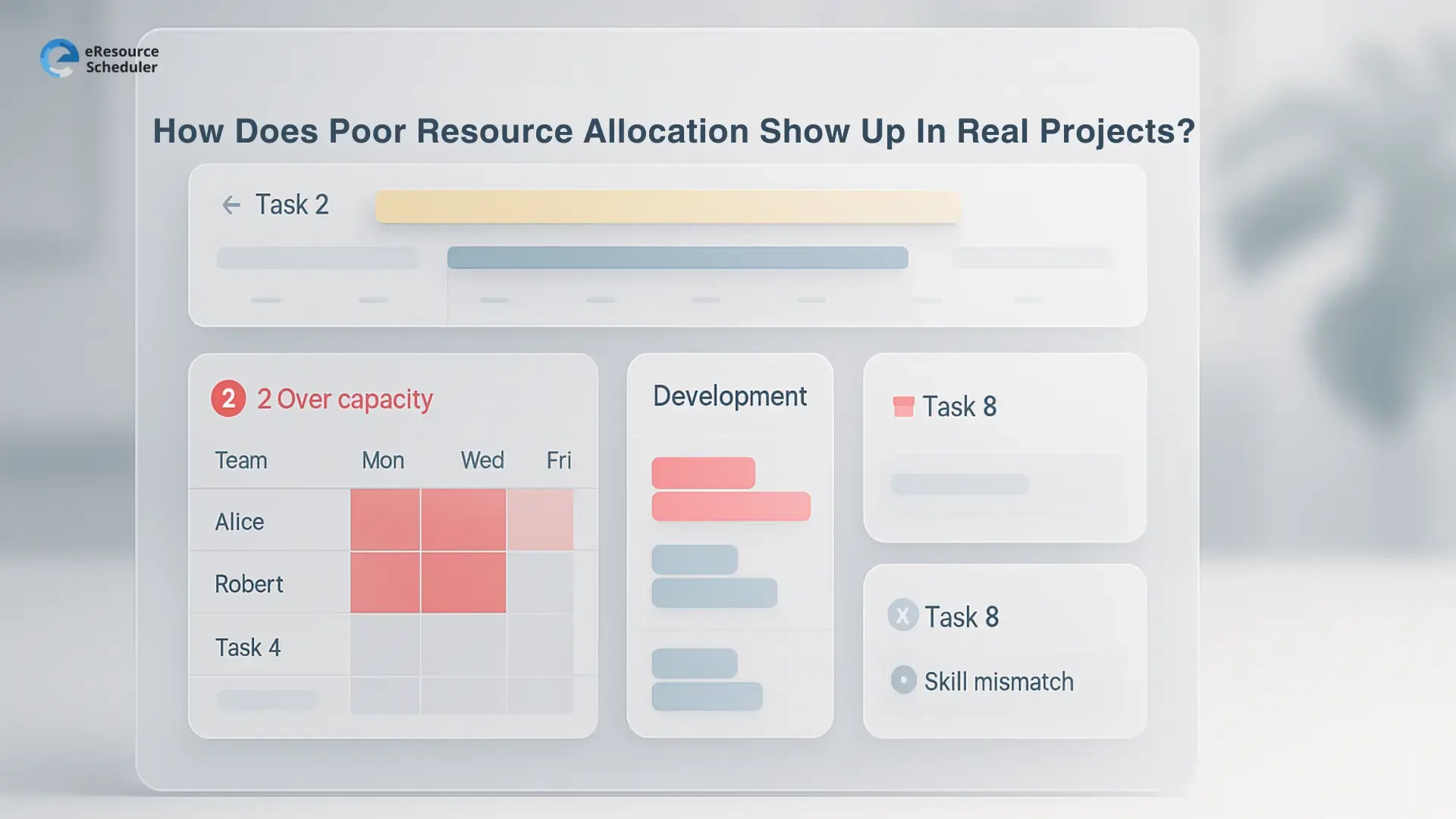
Before fixing resource allocation, it helps to call out what it looks like when it quietly goes wrong.
Most teams never say “our resource allocation is broken.” They just feel the side effects.
These patterns often repeat because allocation choices live in scattered files, private spreadsheets, or in someone’s head. Without a shared view of project resource allocation across all active work, every new request feels urgent, every change feels like an exception, and projects slip for reasons that sound different but trace back to the same planning gaps.
Once you can see where time and skills are going, you can start using allocation as a practical lever instead of a spreadsheet chore.
Strong delivery starts before kickoff.
This is also where early resource capacity planning comes in. If you can see that the next two months are already full for a key role, you can move dates, hire contractors, or reshuffle priorities before clients hear a promise you cannot keep.
Even the best plan will age. The teams that deliver well are the ones that adjust on purpose, not in panic.
When this becomes a habit, project resource allocation turns into a live control panel. You still get surprises, but you catch them earlier and you have better options than “everyone works late.”
Resource allocation works best when ownership is shared instead of sitting with one stressed project manager.
Project managers usually create the first plan because they know scope and milestones. A resource manager or operations lead checks who is already booked across other projects. Team members then flag when their week is full or when a new request will collide with existing work. When all three groups stay involved, the plan stays accurate instead of becoming a nice looking document nobody believes.
For growing delivery teams, a resource management software like eResource Scheduler helps turn resource allocation from guesswork into a steady, repeatable habit. When you choose who works on what with intent, timelines stop slipping for vague reasons, budgets stay closer to plan, and your best people are not stuck in permanent overtime. Clear allocation also makes stakeholder conversations easier because you can point to real capacity instead of polite optimism.
If you want to see whether your delivery problems come from visibility gaps or planning gaps, the simplest move is to start a 14 days free trial of eResource Scheduler and load it with your live work. Give it a few days with your real projects and team workload and you will see very quickly where things are getting stretched. You do not have to decide anything long term today. Just plug in your current pipeline, watch how capacity looks, and let the clarity speak for itself.
1. Why is resource allocation important for project success?
Resource allocation decides whether your plan is realistic or just a nice wish. When people, skills, time and budget are assigned with intent, work flows in the right order, overtime drops, and dates hold more often. In 2026 that is what separates stable delivery from constant firefighting.
2. What is the difference between resource allocation and resource planning?
Resource planning is the bigger picture. You estimate how many people, which skills and how much budget you need over a period of time. Resource allocation is the tactical part. You decide exactly who will do which task and when, based on real availability.
3. How do I start improving resource allocation for my team?
Start simple. List all active projects, list the people you have, then map tasks to named owners instead of vague teams. Check holidays, other project bookings and real weekly capacity. Share this view with the team and adjust together instead of changing plans alone in a spreadsheet.
4. What tools help with project resource allocation for remote or hybrid teams?
Teams typically move from scattered sheets to a dedicated resource management software that shows all bookings in one view. Look for features like visual timelines, role based views, utilisation reports and simple drag and drop style adjustments so you can update allocations quickly without confusing the entire team.
5. How often should project managers review resource allocation?
A good rule is to review allocations at least once a week, and any time scope or priorities change. Weekly checks let you spot overloads early, move work before deadlines slip, and talk with stakeholders using real capacity numbers instead of waiting for issues to explode near delivery.


Plan Smarter. Schedule Faster. For Free.
Join thousands already using eResource Scheduler to align teams, time, and tasks seamlessly.
 ALL FEATURES INCLUDED