Learn more
Project management basics are the root concepts that help your team complete projects successfully. Understanding these fundamentals determines whether your project succeeds or fails. Whether you are managing a five-person team or a cross-functional initiative.
This blog will cover everything you need to know about project management. We will walk you through the 6 phases, 7 methodologies, 10 PM tools, 11 roles, 12 principles, and more. All in simple, practical language.
In simple terms, project management basics are the rules of a game. They will outline a project, how you run it, who you should involve, and how you can measure success. Then it’s on you if you follow it or not.
Understand the basics of project management and follow it to the T. Then you can complete any project, regardless of size or industry.
Project management (PM) is planning, organizing, and controlling resources to achieve specific goals. All while remaining within a set timeframe and budget.
PM is different from assigning tasks. You are defining goals. Managing risks. Tracking progress. And communicating with stakeholders. All simultaneously and in a well-coordinated manner.
Without project management, teams work in silos. Deadlines are missed. Budgets are blown out of proportion. Deliverables are not delivered.
With project management, everyone is aligned, work is trackable, and results are predictable.
Industry Insight:
Only 58% of organizations fully understand the value of
project management. Organizations that undervalue project management as a strategic competency for
driving change report an average of 50% more of their projects failing outright.
Source: PMI Pulse of the Profession
Project Management is used across every industry.
The fundamentals of project management are the LEGO blocks of every project. If you ignore even one of them, your project will collapse.
The PMI identifies 10 areas of project management in the PMBOK® Guide that every manager should understand. In this blog, we will cover the top 7 areas.
1. Integration management makes sure every aspect of the project is on the same page.
2. Scope management defines and controls what is included in the project.
3. Schedule management keeps an eye out to maintain consistent and timely delivery.
4. Cost management involves budgeting, estimating, and controlling project costs.
5. Resource management plans, acquires, and manages the people and materials needed.
6. Communication management determines the receiver and delivery method of information.
7. Risk management intercepts risks before they become major roadblocks.
Project management guarantees projects are done right. Project Portfolio Management (PPM) makes sure the right projects are done.
| Aspect | Project Management | Project Portfolio Management (PPM) |
| Core Focus | Delivering a single project successfully | Managing multiple projects together |
| Key Question | How do we deliver this project? | Which projects should we prioritize? |
| Scope | Individual project | Entire portfolio of projects |
| Objective | Meet project goals (time, cost, scope) | Maximise business value and strategic alignment |
| Decision Level | Execution-focused | Strategy-focused |
| Time Horizon | Short to medium term | Medium to long term |
| Success Measure | Project completion and performance | Overall portfolio performance and ROI |
| Complexity | Lower (single project) | Higher (multiple interdependent projects) |
| Visibility | Limited to one project | Cross-project visibility |
| Use Case | Teams handling defined projects | Organisations managing multiple initiatives simultaneously |
In simple terms, Project Cycle Management acts as the structure, while Project Management acts as the implementation system.
This connection matters because PCM alone is high-level. When there is no project management, things go haywire. Plans remain broad without clear ownership or timelines. There is no coordination across tasks and teams. Decisions are taken with assumptions and not real project data. It becomes hard to measure progress because of inconsistent tracking.
The first step in project management is project initiation. In this phase, you define what the project is, why it matters, and who is involved.
Start by clearly outlining the objectives. It will give your team a shared project goal and a rough roadmap to reach it. When you have the objects, identify the stakeholders involved. When you know who your stakeholders are, you can understand their expectations. Set your success criteria once you have the objectives and stakeholders. Team stays focused. Progress can be assessed. Results become achievable.
Project management operates at two distinct levels essential for project success.
At the strategic level, project management gets a direction. This level lays the foundation. It aligns project goals and business objectives. Secures executive support. Manages the portfolio of initiatives. And takes high-stakes decisions about the 3S’s.
At the operational level, project management becomes focused execution. During this stage, the foundation is laid. Tasks are assigned. Progress is tracked. Day-to-day risks are countered. Communication is maintained. And deliverables are completed on time and up to standard.
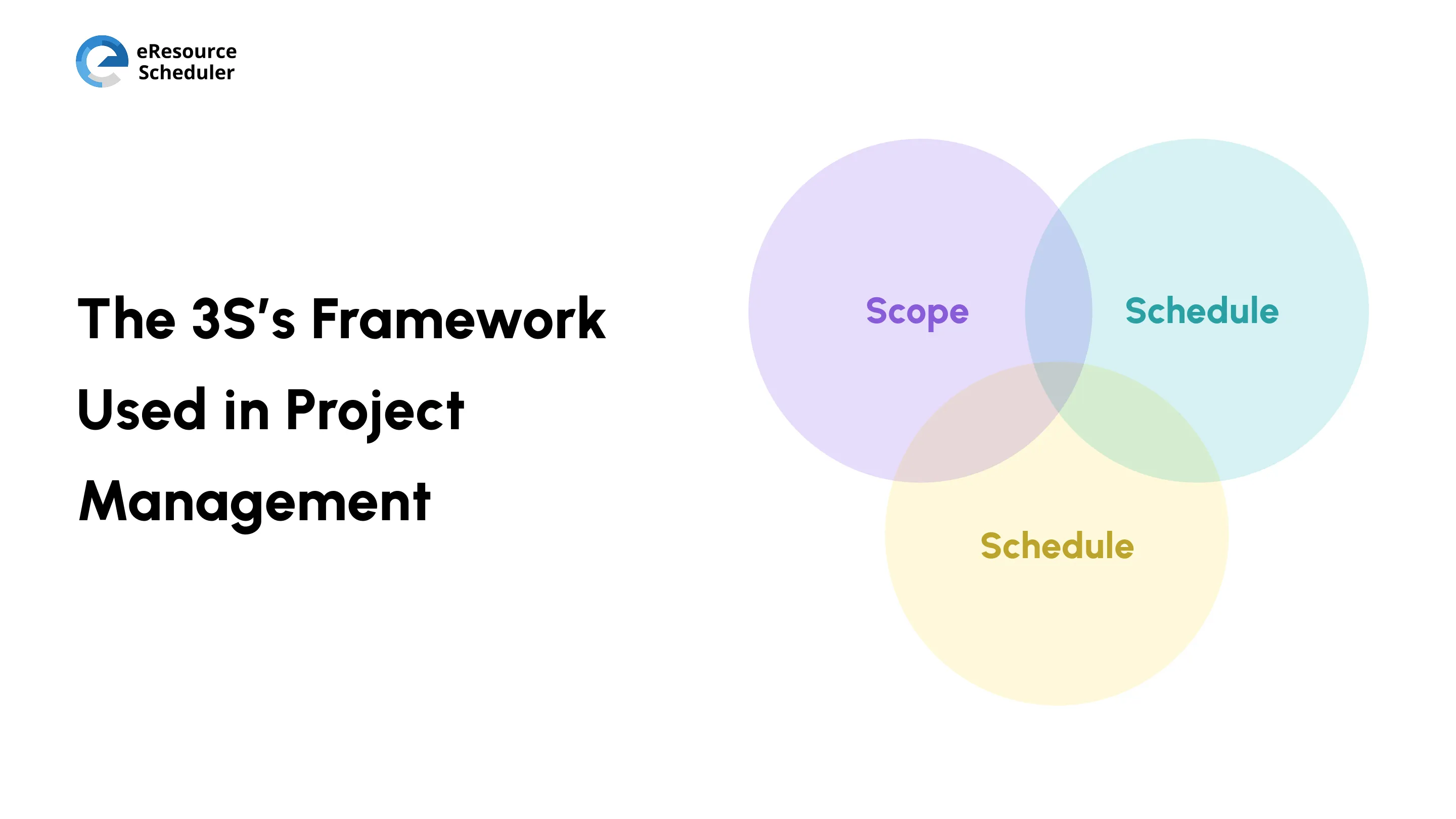
The 3S’s refer to the three most critical constraints that every project must balance. These three are interdependent. Change one, and the other two will be affected:
The 4 pillars are the structures that support every successful project:
The 5C’s capture the critical dimensions of project management.
Most structured projects follow six distinct phases from start to finish. Each phase has specific goals and deliverables.
| Phases | What do they entail? |
| Initiation | Produce a project charter. Define the project, purpose, and feasibility. |
| Definition | Document requirements in detail and lock in the scope, objectives, and constraints. |
| Design | Create the blueprint for the solution. |
| Development | Build, create, or produce the deliverables in accordance with the design. |
| Implementation | Deploy, launch, or hand over the completed deliverable to the end user. |
| Closure | Formally close the project. Capture lessons learned, release resources, and document outcomes. |
Managing multiple projects and resources? See how eResource Scheduler helps teams plan, track, and deliver with confidence.

Your project type, team structure, and desired flexibility will decide which of the below discussed PM approaches matches your requirements.
Waterfall project management is a linear and sequential approach. To begin the next phase, you must complete the current phase every time. Use it for projects which will not give you jump scares and have predictable outcomes.
Agile project management is an iterative approach. You deliver work in short cycles called sprints and review your progress at the end.
To understand the distinction, read our blog on Agile vs Waterfall Project Management.
Lean project management eliminates waste and delivers maximum value with minimum resources. It emphasises the concept of continuous improvement and efficiency.
Six Sigma project management uses the DMAIC (Define, Measure, Analyse, Improve, Control) framework to solve problems.
Under CPM, you identify the longest sequence of dependent tasks in a project. Then focus management attention on these tasks. Delay any project on the critical path, and the whole project will be delayed.
With PERT, you calculate the project duration using three time estimates: optimistic, pessimistic, and most likely. Use it for your complex projects with high uncertainty.
CPM and PERT are often used side by side. To get detailed information on how they work together, read PERT and CPM: What are the Differences and How to Use Them Together.
If you are handed over a project with defined roles, processes, and themes, then you use PRINCE2. You mostly apply it to projects related to government and enterprise organizations.
Implementing proper project management practices does not just improve outcomes; it transforms how teams work. Follow them and see the results yourself.
1. Uphold proactive communication with all the stakeholders
2. Streamline the process of resource allocation
3. Define clear roles and responsibilities for every phase
4. Focus on increasing the satisfaction of your customers
5. Delivered work must be of highest quality and consistency
6. Maintain team collaboration throughout the project
7. Plan and execute every aspect of your project around the goal
8. Manage your budget and keep costs under control
Everything boils down to these 9 habits. They keep your teams focused, aligned, and in control. From start to finish.
1. Every project must have Specific, Measurable, Achievable, Relevant, and Time-bound goals.
2. Lock in your project scope. Define what is and is not included before you begin a project.
3. Break down the complicated deliverables of your project into small tasks with WBS.
4. Use priority frameworks to focus your team's energy on high-impact work.
5. Assign risk owners, create mitigation plans, and review the risk register regularly.
6. Even with non-agile projects, think in terms of Minimum Viable Products (MVPs).
7. Plan your communication around who will receive what information, and the frequency of it.
8. Choose a tool that displays the live status of the project.
9. After every project, run a retrospective. What worked? What did not play out as planned?
Did You Know?
Organizations investing in proven project management practices
waste 28 times less money than those that do not.
Source: PMI Pulse of Profession
Having the right tools in your project management toolkit makes a significant difference in outcomes.
You plan your tasks and track your project schedules on the chart's visual timelines with minimum effort.
Looking for a tool that shows how your work is moving through stages. Kanban Boards are your destination. They are visual boards that manage ongoing workflows and spot bottlenecks.
Keeping track of your tasks is difficult when done in the air. Task lists help you and your team keep track of what needs to be done and by when. Especially if smaller projects or internal initiatives are involved.
Track how much time is spent on each task with tracking tools. Also, compare the planned and actual hours, combine them with timesheets, and spot the difference.
You use risk registers, heat maps, and issue trackers. Congratulations, you have helped your team document, prioritize, and oversee risks across the project life cycle.
You will definitely want your teams, especially your remote and hybrid friends, to stay connected and informed. Collaboration tools make this possible.
Dashboards and reports update you on the health of the projects, budget consumption, and resource utilization. All you have to do is see them.
Don’t want your desk to cage your wings? Mobile Apps are the answer. It will let you update tasks, log time, and check schedules on the go, keeping the project moving even when no one is at the desk.
If you want to plan your work, assign owners, set task deadlines, and track project progress in one shared workspace, project management tools will help.
Resource management software is purpose-built. Dedicated all-in-one software, like eResource Scheduler, will allow you to schedule resources across projects, track utilization, manage timesheets, view reports, and plan capacity
Every project involves multiple essential roles. Each has distinct responsibilities. Understanding who does what prevents confusion and provides accountability.
| S.No. | Roles | Responsibilities |
| 1 | Project Manager | Accountable for delivering results within scope, time, and budget. |
| 2 | Project Sponsor | Endorses the project and provides funding and support. |
| 3 | Stakeholders | Anyone interested in the project outcome. |
| 4 | Team Members | The people who do the actual work. |
| 5 | Product Owner | Defines requirements, prioritizes backlog, and maintains delivery value. |
| 6 | Scrum Master | Removes blockers, runs ceremonies, and confirms adherence to agile principles. |
| 7 | Business Analyst | Bridges the gap between business needs and technical solutions. |
| 8 | Resource Manager | Oversees the availability, allocation, and utilization of people and assets across projects. |
| 9 | QA/Testing Team | Responsible for testing deliverables to see if they meet quality standards. |
| 10 | Vendors and Suppliers | External partners who provide specific goods or services needed to complete the project. |
| 11 | End Users | The people who will ultimately use the final product or system. |
There are 12 principles of the Project Management Institute that are the guiding lights for managing projects.
1. Stewardship binds you to act responsibly and ethically as a caretaker of the project and its resources.
2. Team collaboration builds a culture of shared ownership, trust, and mutual support.
3. Stakeholder engagement involves identifying and keeping the stakeholders occupied throughout the project.
4. Value-focused Make sure your project is value-focused and adds worth to the business and its users.
5. Systems thinking shows you how a project will fit the larger system and impact it.
6. Leadership At a position of leadership, you must guide with vision, empathy, and integrity at all levels of the team.
7. Tailoring lets you adapt methodologies and processes to fit the specific needs of the project.
8. Quality reminds you to maintain a commitment to meet or exceed expectations.
9. Complexity navigation anticipates and manages the naturally arising complications.
10. Risk optimization Under risk optimization, you carry out calculated risks and handle threats.
11. Adaptability and resilience ask you to be flexible and rise stronger from downfalls.
12. Change management will prepare your team and stakeholders for changes that might happen in the projects.
Ready to bring your resources and project management together?

Project management basics are not textbook notes. They decide whether a team misses deadlines or delivers with high spirits. As the project grows, it gets harder to keep track of everything manually. Visibility is what makes a noticeable difference here.
If you want scheduling, timesheets, reports, and forecasting, all under one roof, opt for resource management software like eResource Scheduler. It provides crystal clear visibility into capacity. Regardless of industry type or team structure.
Strong basics create clarity for starting project management. It also helps even when you are already managing multiple projects.
1. What is the Project Management Life Cycle?
The Project Management Life Cycle (PMLC) refers to the sequence of phases a project moves through from beginning to end. Each phase has specific objectives, tools, and deliverables that contribute to the overall project outcome.
2. What are L1, L2, and L3 in Project Management?
L1, L2, and L3 refer to levels of detail in a project plan. The level used depends on the complexity and reporting requirements of the project.
L1: The highest-level summary of phases or major milestones.
L2: Breaks these phases into key deliverables and workstreams.
L3: Goes further into individual tasks and activities.
3. What is the difference between a project manager and a project coordinator?
A project manager sets strategy, makes decisions, and leads the team. A project coordinator supports the manager by handling administrative tasks. The coordinator conducts; the manager leads.
4. What is a PMO in project management?
A PMO (Project Management Office) is a centralized team or department that sets and maintains standards for project management across the organization.
5. What features should a project life cycle management tool include?
A good project life cycle management tool should have resource scheduling, timesheets, planned vs actual reports, resource management, capacity planning, and financial tracking.
6. How much does a project life cycle management software cost?
Costs can vary. Some tools are free but offer only basic features. Most paid tools charge per user each month and include planning, tracking, and reporting. Advanced tools may cost more as they provide forecasting and financial tracking as well.

Plan Smarter. Schedule Faster. For Free.
Join thousands already using eResource Scheduler to align teams, time, and tasks seamlessly.
 ALL FEATURES INCLUDED