Learn more
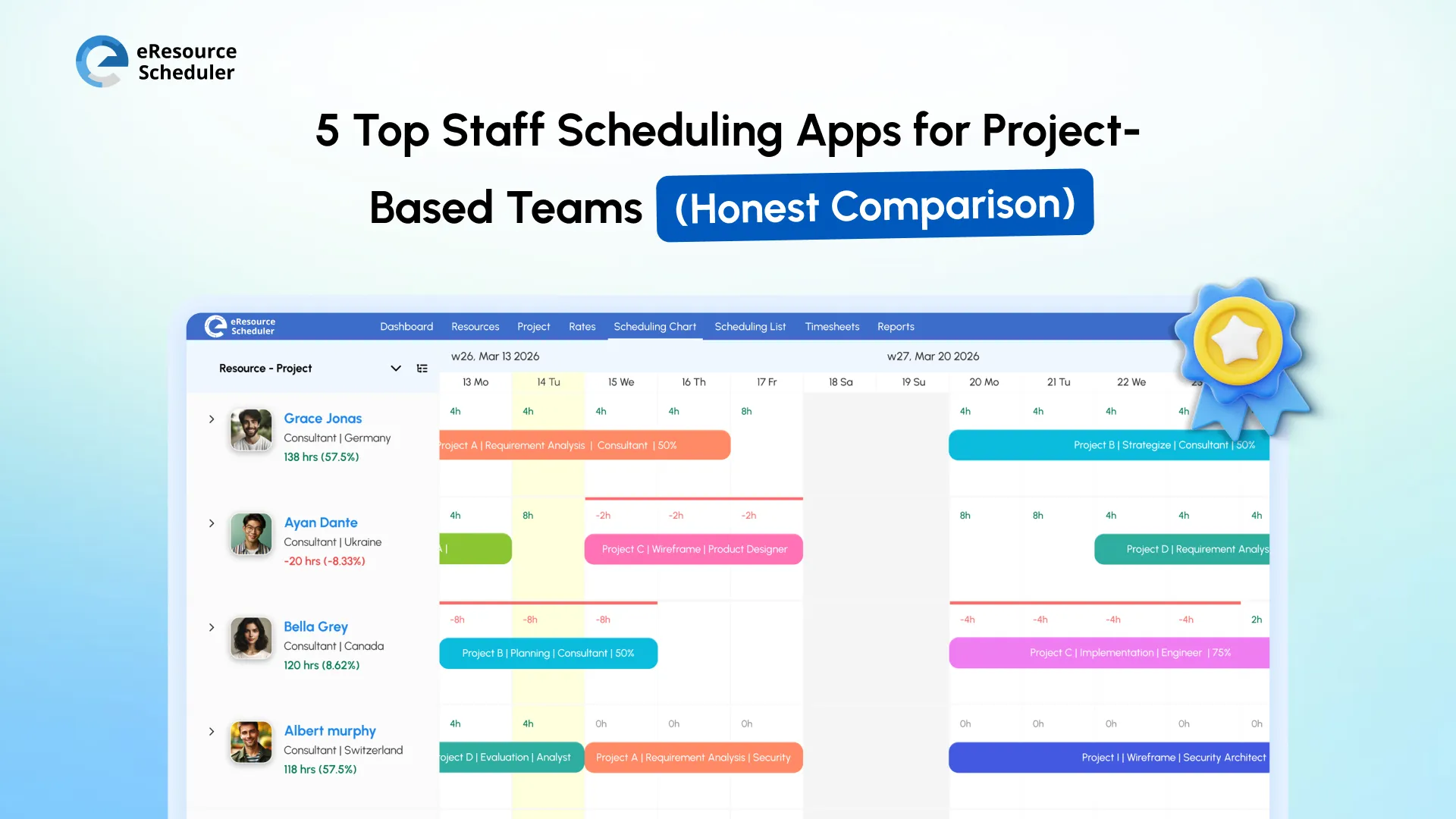
Most staff scheduling apps look the same in a demo. The calendar is clean, the bookings drag smoothly, the team looks evenly distributed. What you do not see in the demo is week three of a fast-moving project, when two people are at 130% capacity, one just went on leave, and the timeline shifted. That is when a scheduling tool proves whether it is actually useful or just a calendar with colors.
I tested five tools against that reality, focusing specifically on resource scheduling software built for project-based teams. The evaluation came down to scheduling depth, utilization visibility, forecasting, planned vs actual tracking, and whether the tool holds up as a team grows.
| App | Best For | Starting Price | Trial | Mobile App | Free Plan |
| eResource Scheduler | Teams needing scheduling, utilization, forecasting, and financials in one platform | From $5/resource/mo (modular) | 14 days | Yes | No |
| Float | Creative/agency teams tracking project-level capacity | From $6/person/mo | 30 days | Yes (buggy on mobile) | No |
| Resource Guru | Teams needing simple, conflict-free availability scheduling | From $4.16/person/mo | 30 days | No | No |
| Deputy | Shift-based workforces with compliance and attendance requirements | From $4.50/user/mo | 30 days | Yes | No |
| Runn | Teams combining resource scheduling with project financial tracking | From $10/person/mo | 30 days | No | No |
eResource Scheduler is the best pick for project-based teams that need scheduling, utilization reporting, forecasting, timesheets, and financials in one platform. Scales from small teams to enterprise without changing tools.
Clean scheduling and project-level capacity tracking. Works well if your workflows are not too complex and you do not need financial reporting.
The clash detection and waiting list genuinely prevent double-booking. Best for teams that want reliable scheduling without a long setup process.
Strong labor law controls and biometric clock-in. Irrelevant if you run project-based work. Essential if you are in retail, healthcare, or hospitality.
Financial forecasting is core to the product. Worth evaluating if project margins and resource costs need to live in the same place, though the interface takes time to learn.
There is no shortage of tools that will show you a color-coded calendar. The question is what happens beyond the calendar. Here are the six criteria this comparison is built around.
1. Scheduling Views and Flexibility
A tool that only shows one view forces you to choose between seeing the team's week and seeing a project's full timeline. Good scheduling software gives you both, plus the ability to switch between resource, project, department, and role views without losing context. That flexibility is not a nice-to-have for teams running multiple concurrent projects.
2. Utilization Visibility
A tool that shows who is booked but cannot tell you whether the team is running at 60% or 120% is doing half the job. Utilization reporting; actual percentage loads, not just filled blocks on a calendar — is what separates a scheduler from a resource management platform.
3. Forecasting and Capacity Planning
Coverage gaps should not arrive as emergencies. The tools that earn a place in project-based teams are the ones that surface under- or over-capacity before it becomes a delivery problem. Resource capacity planning built into the tool, not exported to a spreadsheet is the difference.
4. Planned vs Actual Comparison
Scheduling is a plan. What actually happened is different. Tools with built-in integrated timesheets connected directly to the schedule let you compare the two. That comparison is how project estimates improve over time and how billing stays accurate.
5. Financial and Reporting Depth
For project-based teams, resource decisions have financial consequences. Tools that surface utilization rates, project profitability, and cost-per-role save teams from running a separate spreadsheet alongside their scheduling tool.
6. Configurability and Team Size Fit
A tool that works for a 12-person agency but breaks for a 60-person IT team, or vice versa, is a niche product. Genuine configurability; custom fields, flexible views, user permissions, and API access is what makes a tool last.
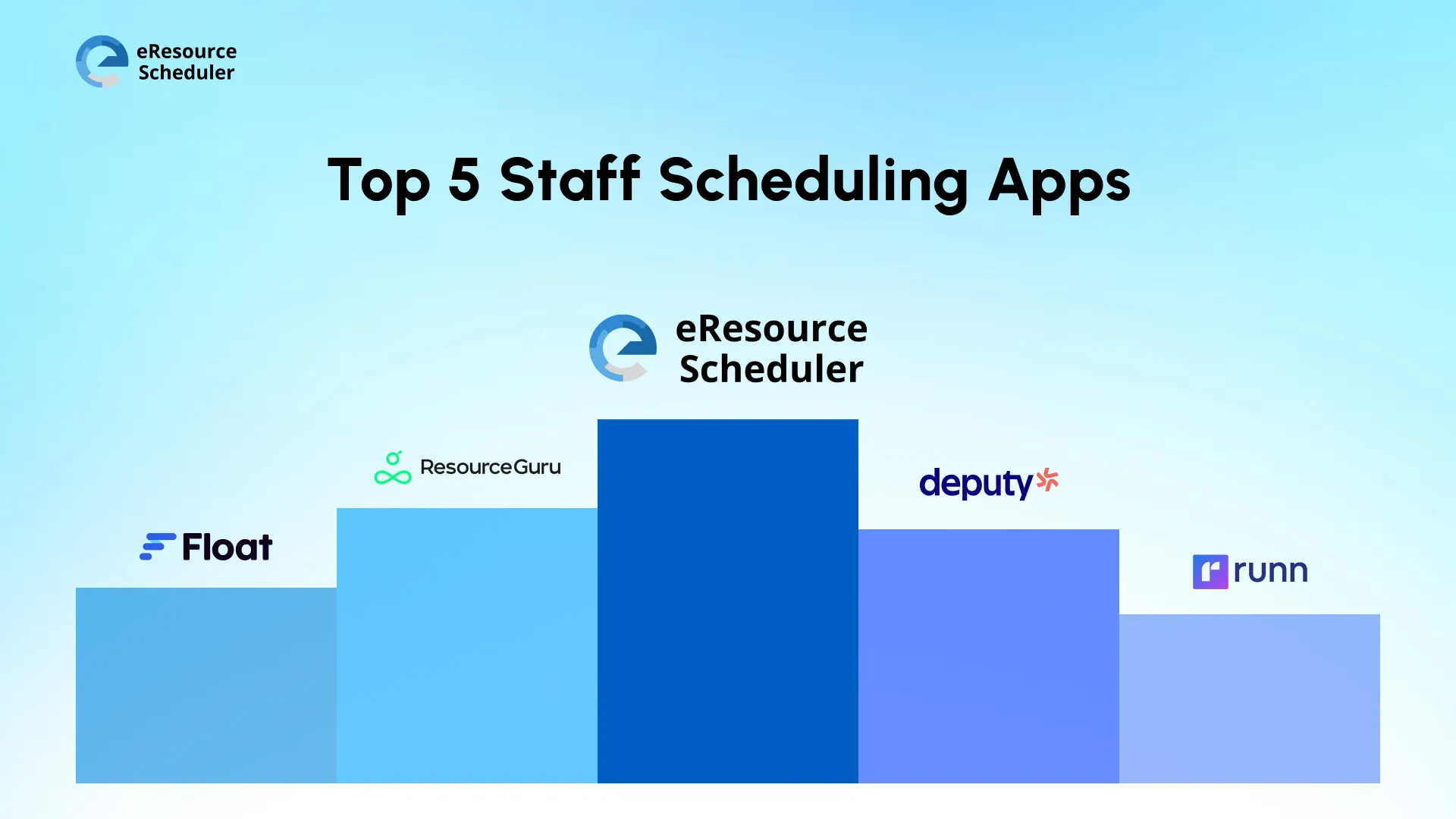
1. eResource Scheduler — Best Staff Scheduling App for Project-Based Teams
eResource Scheduler is the only staff scheduling tool that connects scheduling, utilization, timesheets, and project financials in a single platform. Most tools show you who is booked. eRS shows who is booked, at what percentage, against what was planned, and what that means for project delivery and cost. It works across IT, consulting, engineering, and professional services without workflow compromise.
Gap and forecasting reports in eResource Scheduler surface resource shortfalls before they create delivery problems. Four scheduling views, resource, project, department, and role, give every manager the angle they need without leaving the software.
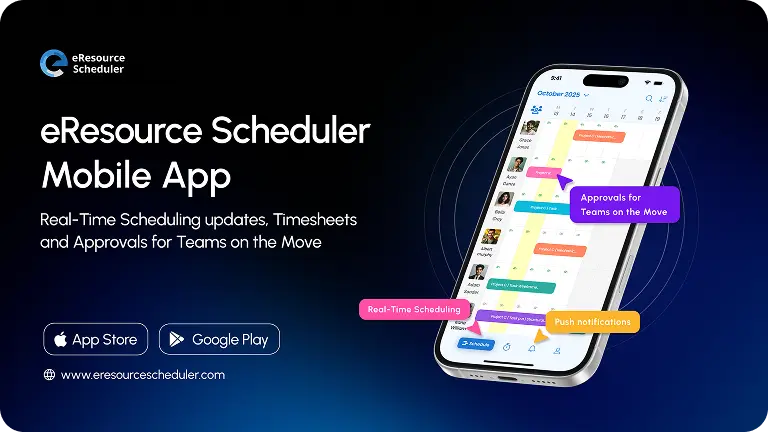
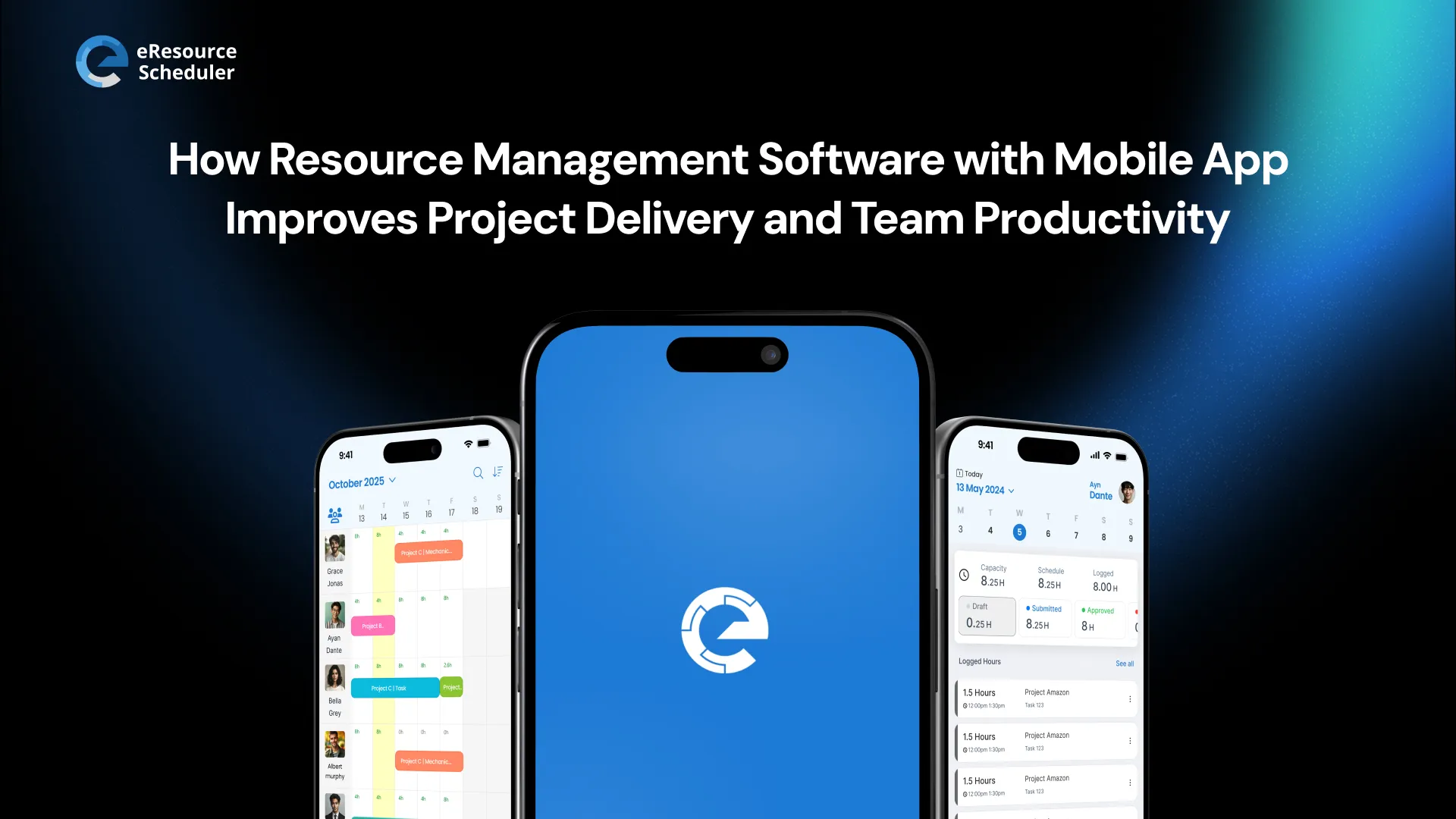
The eResource Scheduler mobile app lets managers update bookings, view schedules, and team members log time from their phone. Most tools treat mobile as read-only. eRS treats it as functional.
Pros:
Cons:
Pro Tip:
Before your trial, map out the 3 questions you most need answered, who is overloaded, where are the gaps, and what is the utilization rate. eResource Scheduler surfaces all three from day one if you set up your projects and resources before demoing the reports.
Pricing: Modular, from $5/resource/month (Scheduling module). See eresourcescheduler.com/licensing for full module details.
Trial: 14 days, full access
Free Plan: No
Available on: Web, iOS, Android

2. Float — Good for Creative and Agency Teams Tracking Project Capacity
Float is clean, fast to onboard, and integrates well with Asana, Slack, and Google Calendar. Project-level capacity tracking works for straightforward agency workflows, and leave management feeds automatically into availability. For a 10 to 15 person agency running simple project work, it fits well.
The limitation is depth. Timesheets, planned vs actual comparison, and financial reporting are only available on the Pro plan at $10/person/month. On the Starter plan you get scheduling and basic capacity views, nothing more. Teams with complex resource structures or multi-department visibility needs will hit the ceiling quickly.
Pros:
Cons:
Pro Tip:
If you are evaluating Float, test the Pro plan during the trial, not Starter. The features most project-based teams actually need, timesheets, estimates vs actuals, are only available there. Committing to Starter means upgrading later or switching tools.
Pricing: Starter: $6/person/month | Pro: $10/person/month | Enterprise: custom (billed annually; 20% discount over monthly)
Trial: 30 days
Free Plan: No
Available on: Web, iOS, Android (mobile has reported sync issues)
3. Resource Guru — Good for Simple, Conflict-Free Availability Scheduling
Resource Guru solves one problem well: double-booking. When you assign someone already at capacity, the request goes into a waiting list rather than silently overwriting the conflict. That behavior prevents a common and costly scheduling error. Setup is fast, leave integrates automatically, and utilization reporting covers the basics reliably.
The gaps are real. There is no mobile app at all. No forecasting, no financial reporting, no planned vs actual. Resource Guru tells you who is scheduled and flags conflicts. Everything beyond that needs a different tool or a separate spreadsheet.
Pros:
Cons:
Pro Tip:
Resource Guru's waiting list is most valuable when your team has shared senior resources, one lead developer or one solutions architect spread across multiple projects. Set those people up first and let the waiting list show you where the real contention is.
Pricing: Grasshopper: $4.16/person/month | Blackbelt: $6.65/person/month | Master: $10/person/month (all billed annually)
Trial: 30 days
Free Plan: No
Available on: Web only
4. Deputy — Purpose-Built for Shift-Based Teams With Compliance Requirements
Deputy is built for shift-based workforces where getting the schedule wrong has legal consequences: retail, healthcare, hospitality. Labor law controls apply at the assignment level before the schedule goes live. Clock-in includes GPS, mobile, and biometric facial recognition for environments where attendance accuracy has compliance weight.
If that is not your context, most of what makes Deputy useful is irrelevant. There are no project views, no utilization forecasting, no capacity planning, and no financial reporting. Pricing starts at $4.50/user/month with a $30/month minimum across all plans.
Pros:
Cons:
Pro Tip:
Only shortlist Deputy if shift coverage, labor law compliance, or clock-in accuracy is the core problem. If your team works on projects, not shifts, Deputy will solve problems you do not have while leaving the ones you do unsolved.
Pricing: Scheduling: $4.50/user/month | Time & Attendance: $4.50/user/month | Premium: $6/user/month | Enterprise: custom. Minimum $30/month.
Trial: 30 days
Free Plan: No
Available on: Web, iOS, Android
5. Runn — Good for Teams Connecting Resource Scheduling to Project Financials
Runn links resource allocations to project costs in real time. Change an assignment and the budget impact updates immediately. Tentative bookings let you plan for pipeline work without blocking the live schedule, which is useful for teams managing a mix of confirmed and probable projects.
The trade-offs are significant. No mobile app. A steep interface learning curve. The previous free plan is gone and current plans require a minimum of 20 seats, which puts the entry cost at $200/month on Standard. This is not a tool to pick for a small team or for a manager who needs fast onboarding.
Pros:
Cons:
Pro Tip:
Runn's tentative booking feature is its most underused strength. If your team regularly pitches work before it is confirmed, build out your pipeline in tentative bookings from day one. It gives you a realistic capacity picture that accounts for probable, not just sold, work.
Pricing: Standard: $10/person/month | Lite and Advanced: contact sales. Minimum 20 seats required.
Trial: 30 days (Standard plan)
Free Plan: No — previous free plan discontinued
Available on: Web only
Pro Tip:
For a broader look at how these tools sit within the resource management landscape, see this overview of resource management tools.
| eResource Scheduler | Float | Resource Guru | Deputy | Runn | |
| Starting Price | From $5/resource/mo | $6/person/mo | $4.16/person/mo | $4.50/user/mo | $10/person/mo |
| Free Plan | No | No | No | No | No |
| Mobile App | ✓ Yes | ✓ Yes (limited) | ✗ No | ✓ Yes | ✗ No |
| Multiple Views | ✓ Resource, project, dept, role | Limited | ✗ No | ✗ No | Limited |
| Forecasting / Gap Report | ✓ Yes | Basic | ✗ No | ✗ No | ✓ Yes |
| Planned vs Actual | ✓ Yes | ✓ Pro plan only | ✗ No | ✗ No | ✓ Yes |
| Financial Reporting | ✓ Yes | ✓ Limited | ✗ No | ✗ No | ✓ Yes |
| Utilization Reporting | ✓ Yes | ✓ Yes | ✓ Basic | ✗ No | ✓ Yes |
| Conflict / Clash Detection | ✓ Yes | Limited | ✓ Yes | ✓ Yes | Basic |
| Timesheets | ✓ Yes | ✓ Pro plan | ✓ Blackbelt+ | Attendance only | ✓ Yes |
| Compliance Controls | ✗ No | ✗ No | ✗ No | ✓ Yes | ✗ No |
| REST API / Webhooks | ✓ Both | ✓ Yes | Limited | ✓ Yes | ✓ Yes |
Also Read: what resource scheduling actually involves
For project-based teams that need scheduling, utilization, forecasting, timesheets, and financial reporting in one software, eResource Scheduler is the most complete option in this comparison. It is the only tool here that covers all of those requirements and scales from small teams to enterprise without changing the software.
Float works well for agencies that want clean visual scheduling without reporting depth. Resource Guru is the right call when preventing double-bookings is the primary problem. Runn earns evaluation when project margins and resource costs need to live alongside the schedule. Deputy belongs on a completely different shortlist for shift-based and compliance-heavy environments.
Start your free 14-day trial of eResource Scheduler. No credit card required.Try it for free.
1. What are the best staff scheduling apps for project-based teams?
The best staff scheduling apps help teams manage workloads, availability, and project timelines efficiently. Many project-based teams prefer eResource Scheduler for its scheduling, forecasting, and utilization tracking features.
2. Which staff scheduling app is best for growing teams?
Growing teams usually need better visibility into workloads and capacity. eResource Scheduler is a strong option because it scales well as teams and projects expand.
3. Are staff scheduling apps better than spreadsheets?
Yes. Scheduling apps offer real-time updates, workload visibility, and fewer manual errors compared to spreadsheets.
4. What features should businesses look for in staff scheduling apps?
Key features include resource allocation, forecasting, utilization tracking, reporting, mobile access, and flexible scheduling views.
5. Can staff scheduling apps help reduce employee overload?
Yes. Scheduling tools help managers spot overbooked employees early and rebalance workloads before delays or burnout happen.


Plan Smarter. Schedule Faster. For Free.
Join thousands already using eResource Scheduler to align teams, time, and tasks seamlessly.
 ALL FEATURES INCLUDED