Learn more
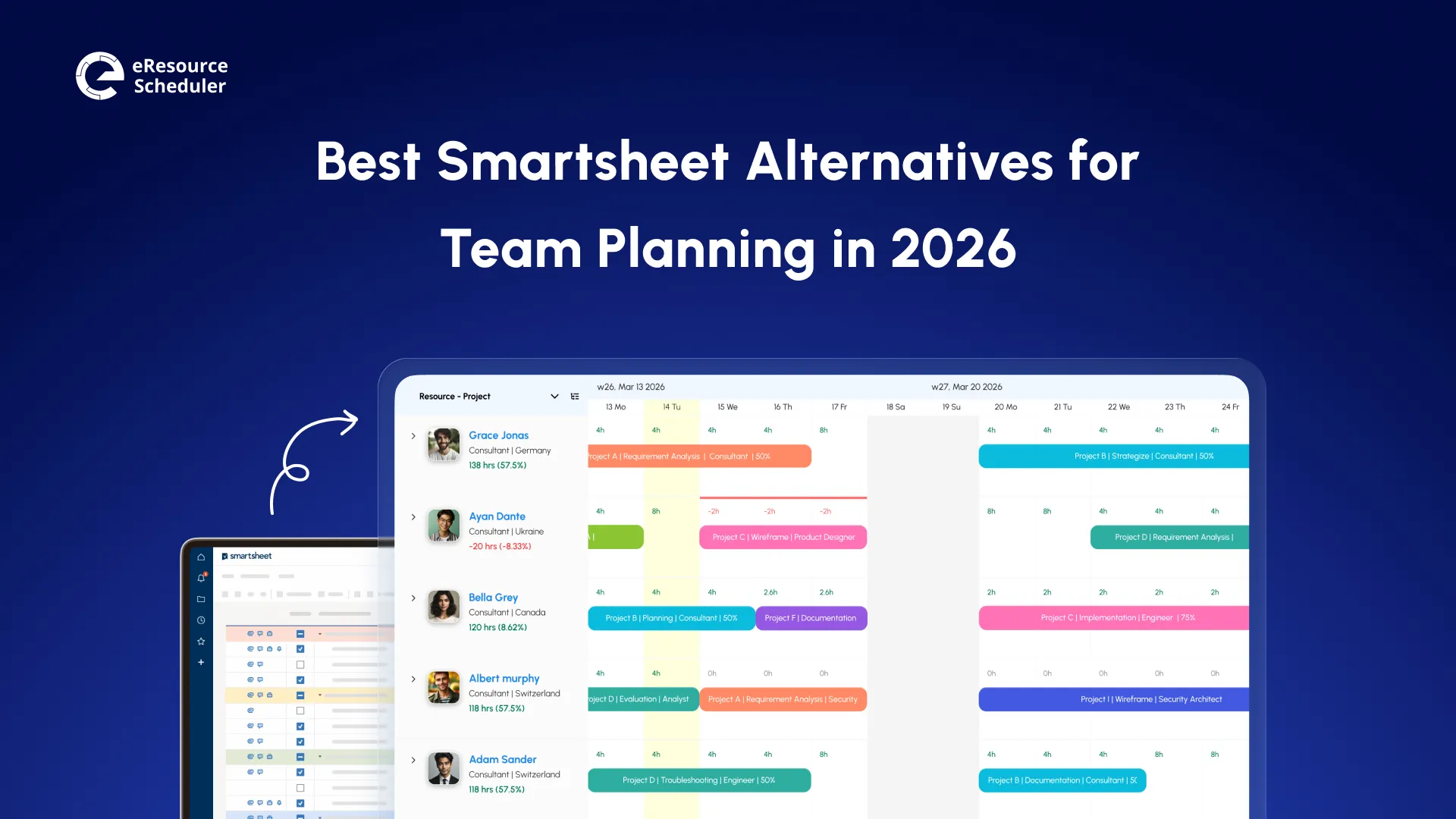
Most teams that land on Smartsheet do so because it feels like a natural step up from Excel. It is familiar and visual, and it gets teams organized fast. It works. Until someone asks: ‘If this project moves two weeks earlier, who gets overloaded, and what else has to move?’ At this point, Smartsheet goes quiet. It can show you data. It cannot resolve constraints.
This is the moment most teams start searching for Smartsheet alternatives. Not because Smartsheet is a bad tool. It is a solid, proven platform that millions of teams use every day. But the spreadsheet-style model it is built on has a ceiling. Once your projects multiply, your people are shared across five initiatives, and your leadership starts asking for forecasting confidence. You need something that thinks and operates in people, not in cells.
If you are rethinking resource planning software and wondering which tools actually solve the right problem, you are in the right place. This blog compares the best Smartsheet alternatives.
Industry Insight:
According to PMI’s Pulse of Profession 2025, project professionals with strong planning practices show 27% lower failure rates. Only 18% of project professionals currently meet that bar. Poor resource planning sits at the centre of most of these failures.
Think of Smartsheet like a very powerful Excel sheet that got a design update. List, columns, status fields, dashboards: it handles all of these well. But the minute your planning question shifts from ‘What tasks are due this week’ to ‘Who has the capacity to take on this project without burning out?’ You are asking something the tool was never designed to answer.
Here is where teams start running into walls:
Smartsheet can show you tasks. What it cannot reliably show you is demand vs capacity across your entire portfolio. If three projects are all pulling on the same developer or analyst at the same time, Smartsheet will not surface that conflict until deadlines start slipping. Eventually, you end up firefighting instead of planning. Again.
Smartsheet’s scheduling capabilities are serviceable, at best, for straightforward timelines. But cross-project dependency management, real-time availability checks, and scenario modeling (the things managers need when planning gets complicated) are not strengths. Many teams end up building elaborate workarounds using automations and cross-sheet references, which creates fragility rather than clarity.
Smartsheet’s communication resembles email threads attached to rows. You can comment, tag teammates, and reply. But the conversation is scattered across sheets, and there is no single thread for a project. Busy people miss messages. Context gets lost in the maze of rows and columns. Important decisions end up buried in cell comments.
One of the biggest promises of project management software is eliminating manual, repetitive work. Smartsheet automates some workflows, but teams frequently report having to re-enter the same setup for recurring tasks.
Before we list the tools, let's get one detail ironed out. Not all Smartsheet alternatives solve the same problem. The biggest split is between these two:
These tools optimize for execution clarity. They will give you fast updates, clean dashboards, and automation for task workflows. They work best when your teams are fairly dedicated to 1-2 projects at a time, and your planning is predictable.
These tools start from a different premise. They believe in the ‘work fails not because tasks are unclear, but because capacity is misjudged’ theory. These tools prioritize availability, workload balance across projects, and visibility into future constraints before commitments.
A Note on Planning Philosophy
Every tool on this list is also compared by planning philosophy, not only by pricing or features. The question is simple. Is your team struggling with task clarity, or with knowing whether the right people are actually available? Your answer points you to the right category.
The tool that fits you depends on which question you are actually trying to answer. Keep that in mind as you read through the comparison below.
Before we go deep on each tool, here is a side-by-side view of how they stack up by planning philosophy, not just features.
| Tool | Core Strength | Key Limitation | Best For |
| eResource Scheduler | Portfolio visibility across people, capacity, timesheets, and financials | Focused on managing and planning existing teams | Teams managing shared resources across multiple projects |
| Microsoft Project | Robust project, programme, and portfolio planning | Steep learning curve; limited third-party integrations; no Mac support | Experienced PMs running large, structured programmes |
| ClickUp | Highly customisable views; strong automation and time-tracking | Dashboards cannot be exported; they can feel overwhelming at scale | Teams that want one tool to handle tasks, docs, and goals |
| Asana | Clean interface; great for cross-team task visibility | No native time tracking; tasks cannot have multiple assignees | Smaller teams running simpler, more predictable projects |
| Monday.com | Visual boards; easy onboarding; mobile-friendly | Gantt charts are basic; cost tracking is limited | Teams that prioritise visual collaboration over depth |
| Wrike | Strong reporting; AI-assisted task population | Non-friendly navigation; user minimums raise cost | Mid-size teams with complex reporting needs |
| Liquid Planner | Predictive scheduling; auto-adjusts when priorities or availability shift | Steep learning curve; limited dashboard customisation | Technical and engineering teams managing complex, high-change projects |
Now let's look at what each of these tools actually does, more importantly, which team they fit.
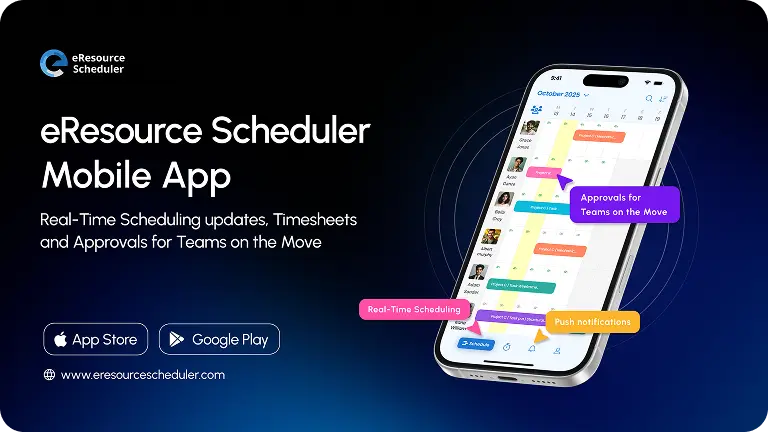
eResource Scheduler starts with a question that most tools usually skip. Who can realistically do the work without getting overloaded across everything already planned? It is not a task tracker. It is primarily resource scheduling software designed for managers operating across multiple projects with shared teams. For the people in these teams, it means no more guessing what is on their plate. They can see their own schedule, log time against actual work, and flag availability conflicts before they become a problem.
This is one of the most established project management platforms. It sits inside the Microsoft 365 ecosystem. Which means it plays well with Teams, Planner, and Excel. Its project planning depth is hard to match.
It combines task management, docs, time tracking, goal setting, and dashboards into a single customizable workplace. If your team wants a single tool to replace multiple apps, this tool is a serious contender.
This tool focuses on making task assignment, team collaboration, and project visibility straightforward. All of it without overwhelming users with options. If you are running smaller, more predictable projects with dedicated teams, it is one of the easiest tools to adopt.
It is a visually intuitive tool. Everything connects to a central view where your team can see project status, resource load, and progress at a glance. For teams that live in spreadsheets but want something more visual and collaborative, this is an approachable upgrade.
This tool is for mid-sized teams that need structured project management with strong reporting. Its standout feature in recent years is the adoption of AI to help populate task details faster. It is a welcome addition when you are managing a high volume of work across multiple stakeholders.
This tool is built around an idea that most project teams ignore. Plans change, and your scheduling engine should keep up automatically. If something shifts, it recalculates rather than waiting for a manager to update manually.
Technical and engineering teams managing complex, change-heavy projects where dynamic rescheduling and resource conflict resolution matter more than task board simplicity.
Looking at these seven tools together, the pattern is clear. Most of them are excellent at managing what needs to happen. Fewer are built to tell you whether it can happen, given your actual team, their current workload, and everything else already on the books.
Smartsheet is one tool in your stack, not the whole stack. Switching away from it does not touch your code repositories, your CRM, your finance system, or your support platform. Those stay exactly where they are.
What changes is the planning layer. The part where someone decides who does the work, when, and whether they actually have room for it. That is what Smartsheet struggles with at scale, and that is precisely what the tools on this list are built to handle. So the gap you are closing is specific. You are not rebuilding how your team works. You are moving past the tool you outgrew the moment your planning questions got harder.
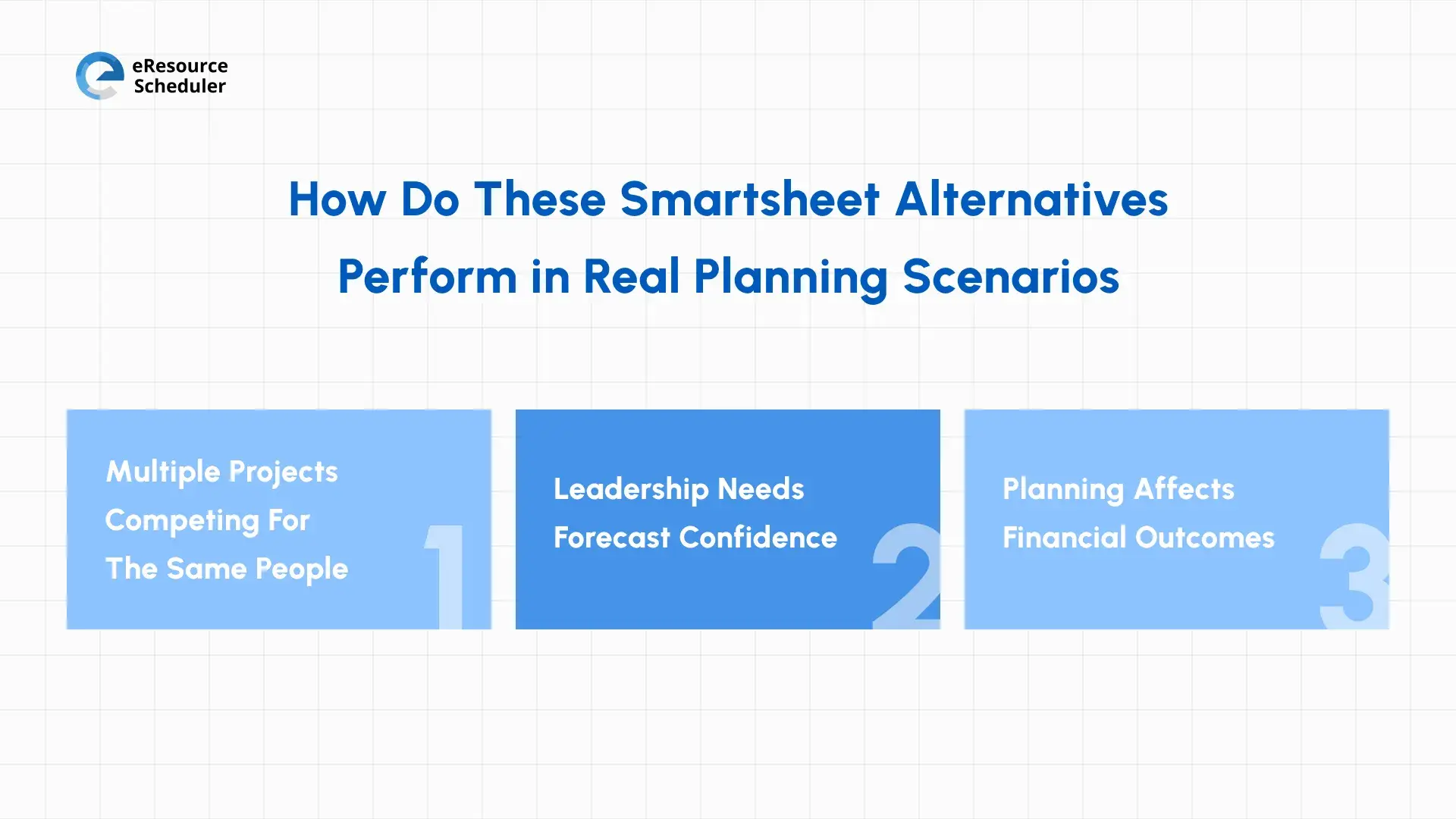
Feature lists tell you what a tool can do. But the real differences show up when you put them in actual planning situations. Here are three scenarios that reveal a lot about which tool holds up.
This is the most common planning failure we see. Three projects need the same data analyst in the same two-week window.
In a task-centric tool, this conflict is invisible until someone starts dropping balls. You find out retrospectively. That is when the analyst tells you they have been working sixty hours a week.
Resource-first tools surface this conflict during the planning stage. You can see the overlapping demand across projects in a single view. Adjust scope or timelines before the team feels it. Make the trade-off deliberately rather than reactively.
Smartsheet can show you planned timelines. What it cannot easily tell you is whether those timelines are grounded in reality. When a director asks, ‘Will we hit this date?’ The honest answer requires knowing three things.
1. What did similar projects actually take?
2. What did we estimate vs what happened?
3. Are the people assigned actually available?
Tools that integrate planning with timesheet data compare what was forecasted against what actually happened. This lets you close that loop. Estimation bias becomes visible. You stop repeating the same optimistic mistake.
For professional service teams, consulting firms, or any team billing by the hour, planning errors are not just operational problems. They are margin problems. If you overallocate a senior consultant to a fixed-price project, that surplus cost comes straight out of your profit.
Resource-centric tools connect effort, cost, and delivery in one view. This lets leaders see not just what is planned, but what it means for the bottom line. It turns resource planning from a scheduling exercise into a decision-making factor.
The seven Smartsheet alternatives above are all genuinely good at what they do. The decision-making question is: Which problem are you actually trying to solve?
Here is a practical decision frame:
Your team needs a clear system for assigning work, tracking progress, and keeping everyone aligned. You want something with flexible views, built-in automation, and easy collaboration without a steep learning curve. This is where task-centric tools like ClickUp and Asana shine. If you want a head start on structuring how your team works, this blog on building better team schedules is for you.
You need to know, before you commit, whether your people actually have room for the work. Task-centric tools will not help here. Look for resource-first systems, like eResource Scheduler. They will show availability and workload across projects in a single view. This will directly and indirectly benefit your resource planning effectively.

When the same people report to multiple managers, work across multiple projects, and have skills that are constantly in demand. You need portfolio-level visibility. You cannot manage that in a project-level task board. You need software like eResource Scheduler and Microsoft Project to handle this level of complexity.
If your planning decisions directly affect billing, margins, or cost recovery, you need a tool that connects scheduling to financials. The best employee scheduling software options for these teams are the ones that can tell you what a plan costs, not just when it ends.
Fact Check
According to McKinsey’s HR Monitor Survey, although 73% of organizations conduct operational workforce planning, only 12% of HR leaders say they do strategic workforce planning with at least a three-year focus.
The right Smartsheet alternative is not the one with the most features or the best-known name. It is the one that answers the planning question your current tool cannot. Use the decision frame in the previous section, match it to your team’s situation, and you will have a shortlist of one or two tools worth trailing.
This is a better starting point than a feature comparison spreadsheet. Which, frankly, is how most teams end up back in the same problem they started with.


Plan Smarter. Schedule Faster. For Free.
Join thousands already using eResource Scheduler to align teams, time, and tasks seamlessly.
 ALL FEATURES INCLUDED