Learn more
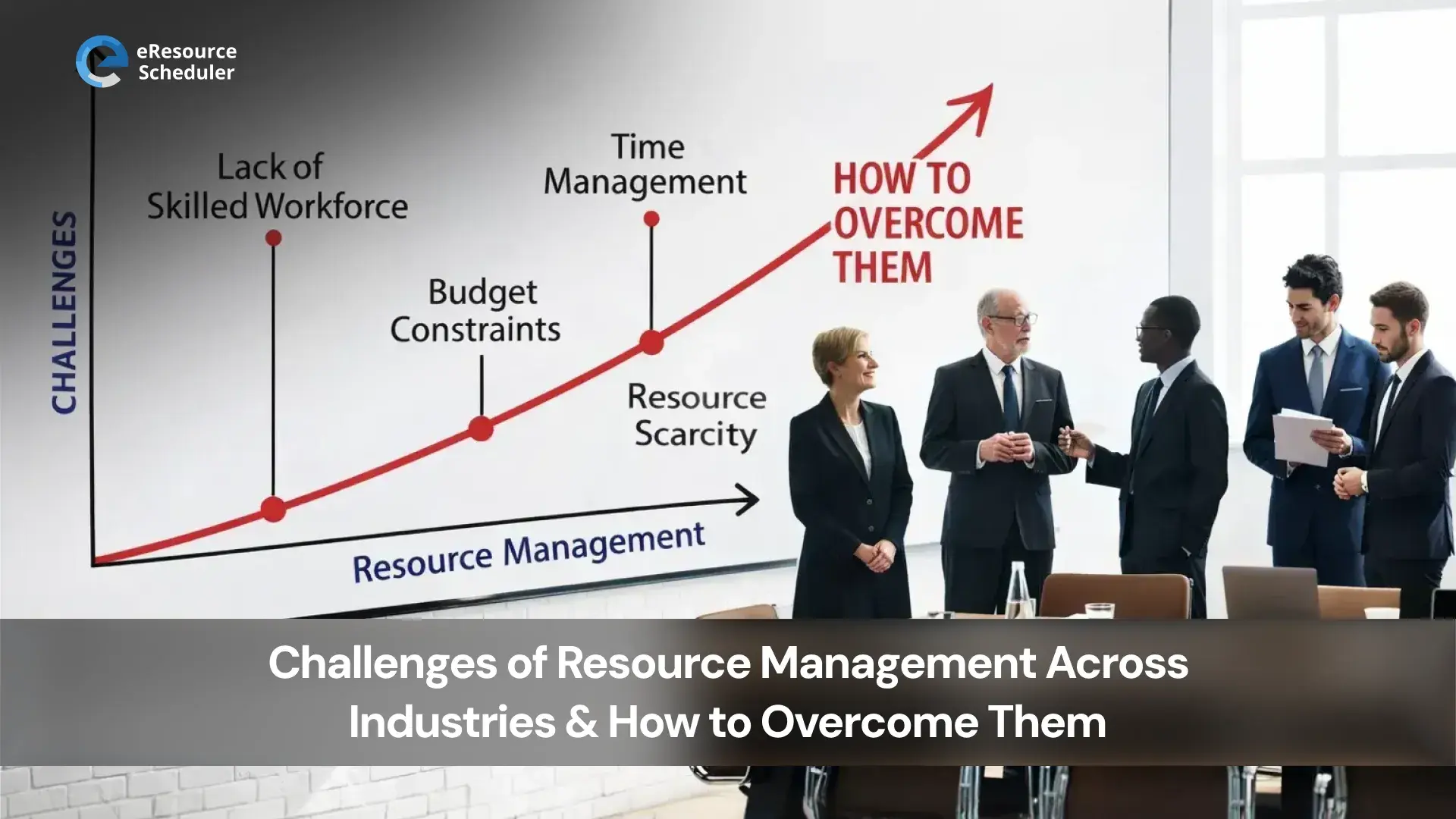
Irrespective of the size, nature, and type of business, most project managers concur that resource management is one of the critical factors that determine project success.
A resource management tool gives project managers the bird's eye view as well as a detailed view of projects. In the bigger picture, it provides an overview of the entire team, what they are working on, and what remains to be done.
Resource management rarely fails because of effort. It fails because visibility fragments as teams grow, timelines tighten, and dependencies multiply. What starts as a simple scheduling exercise quickly turns into a high-stakes balancing act between skills, availability, costs, and delivery commitments.
Without a centralized system of record, decisions get reactive, utilization drops, and delivery risk quietly creeps in. This challenge looks different across industries, but the root cause stays the same. Limited clarity on who is available, when, and how outcomes will be impacted.
In this guide, we take a look at the various challenges associated with managing resources in a few industries and how eResource Scheduler can help with effective resource allocation and management.
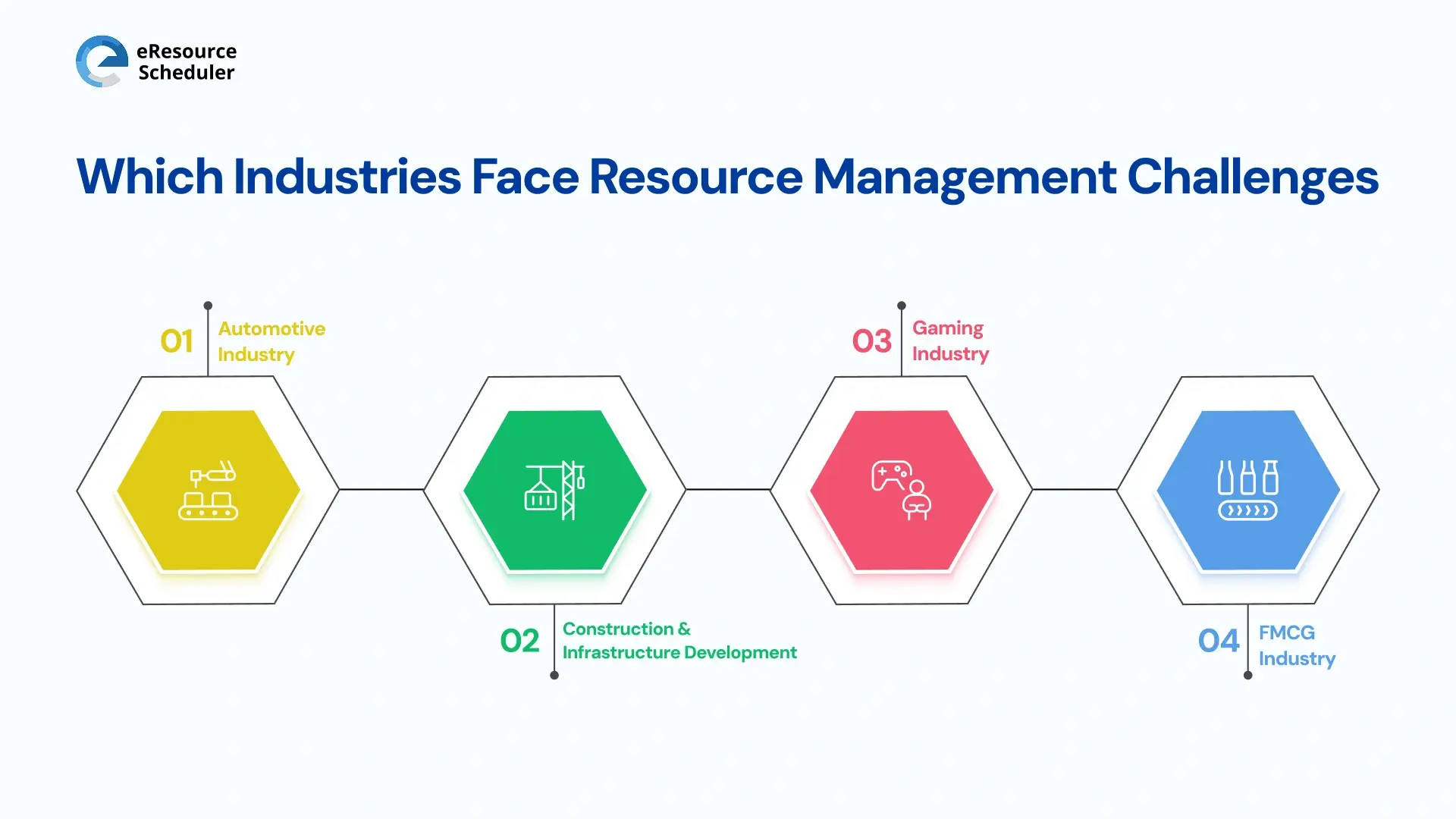
Automotive companies operate at scale with teams spread across countries and time zones. Along with manufacturing and sales, specialized resources support R&D, design, development, and marketing. These companies also employ resources from different specializations, like mechanical engineers, automobile engineers, electrical engineers, design experts, safety engineers, and more.
A key resource management challenge is finding the right qualified resources across locations, especially when employees are shared across multiple projects. Limited visibility into skills, availability, and workload makes effective allocation difficult.
Another challenge here is to ensure optimum utilization of resources. Project managers have a hard time ensuring fair distribution of workload. Very often, they end up using critical team members, again and again, making them feel overburdened, while other team members end up feeling neglected.
Several studies indicate that when the workload is not equitably distributed, it causes overburdened team members to lose out on productivity and efficiency while making others feel less motivated. Under or over-allocation is one of the main reasons for resource attrition.
eResource Scheduler brings clarity and control to complex, distributed teams by centralizing resource data and simplifying allocation.
Key capabilities:
Centralized resource repository
A single view of resources across teams,
projects, branches, and countries. Skills, availability, and workloads are visible in real time, making it easier to
identify the right resources and drive optimal utilization.
Faster, smarter allocation
Intuitive drag-and-drop scheduling charts allow
project managers to assign and adjust work in seconds, even when resources are shared across multiple projects.
Complete workload visibility
Project managers can instantly see who is working
on what, while team members have clear visibility into their assigned tasks. This keeps distributed teams aligned
across locations.
Real-time availability and utilization insights
Live reports show resource
availability and utilization as it happens, helping prevent overbooking, resolve conflicts early, and maintain
balanced workloads.
The workforce is the biggest asset of any construction company. The success of projects depends on the skill of the workers and the managers who oversee work allocation. However, resource management in the construction industry is plagued with several problems, such as high employee turnover, a lack of qualified candidates, safety concerns, temporary workers, and more.
One of the biggest challenges in resource management for construction companies is the lack of resource profiling. Without a central repository of resources, it becomes complicated for project managers to identify the right resources using various attributes like location, experience, certifications, availability, and more.
Additionally, this manual approach is time-consuming as project managers have to update the working time of each resource manually, leading to an inaccurate calculation of project costs.
eResource Scheduler makes it easy to create a centralized database of all resources. Project managers and coordinators can view, filter, and sort resources based on experience, location, qualification, professional certifications, availability, and more.
Since eResource Scheduler is a multi-user application, all project updates are shared with users who have access to it. It helps different project managers get a complete picture of resource availability, such as who is working on what, till when, so that they can plan and allocate resources accordingly.
The software comes with an inbuilt timesheets module that makes it easy to calculate the time spent by resources on different projects.

The gaming industry is highly dynamic and hyper-competitive. For companies to succeed in the fast-changing environment, they have to stay on top of their game and focus on both technologies and resources.
Gaming companies have a wide variety of resources, such as full-time game developers, designers, testers, content creators, marketers, coders, and more. Besides the full-time resources, game companies usually hire interns, vendors, and freelance game experts, especially during the pre-release testing phases.
With so many different types of resources working across branches and remotely, resource allocation and coordination are a crucial aspect of project planning for gaming companies. Project managers have to go through a long list of resources, check availability, and experience to allocate the right resources for various tasks.
Besides resource identification, project managers also have to calculate resource cost based on their working time. Project managers are in charge of calculating the resource cost and revenue for each project so that they can ensure that game releases are profitable. With the right resource planning software, this becomes less tedious and time-consuming.
eResource Scheduler simplifies resource planning by bringing structure, visibility, and control into one system.
Structured resource profiling
Project managers can add all resources and
categorize them by resource type, skills, and prior experience. This creates a centralized repository that makes it
easy to identify the right resource for every requirement.
Quick filtering and allocation
Built-in filters allow managers to instantly
narrow down resources by role, such as testers, designers, or developers. Availability, skills, and experience can
be compared in real time, followed by fast drag-and-drop task scheduling.
Proactive capacity management
eResource Scheduler highlights resource shortages and excesses
based on project demand. This enables timely hiring, reallocation, or workload balancing, ensuring projects remain
adequately staffed.
Accurate project financials
The platform calculates project costs and expenses
automatically, removing manual effort. Financial data can be viewed at the project, game, or organization level,
supporting more informed delivery and hiring decisions.
FMCG (Fast Moving Consumer Goods) is one of the biggest and most complicated industries. With supply chains spanning across continents, resource management is overwhelming. Most FMCG companies have a presence across countries and employ tens of thousands of employees, including store workers, supply chain managers, raw material suppliers, marketers, and plenty more.
For an FMCG company to get an edge over its competitors, they need the right resource management system. Without knowing the current availability of resources, it becomes difficult to allocate tasks and complete different aspects of the project.
Improper resource management could lead to problems like project delays, a fall in customer satisfaction, a drop in sales, reduced utilization of resources, loss of revenue, and more.
The eResource Scheduler offers a centralized database of all types of resources, irrespective of the number of employees. Whether you want to add a few hundred employees or tens of thousands of employees, the software can get the job done.
The resource scheduling software offers detailed resource utilization reports, helping managers to compare planned and actual utilization of resources. It provides different views, daily, weekly, and monthly, in easy-to-read graphs and charts. Simply put, eResource Scheduler makes it easy for FMCG companies to grow faster with maximum utilization of resources, thereby boosting productivity and efficiency.

Executives of hospitals are under tremendous pressure from stakeholders to increase revenues with better management strategies. One of the biggest challenges currently faced by healthcare organizations in the developed and developing world is meeting increasing demands with limited resources.
There is a significant shortage of qualified healthcare professionals, leading to delays in providing patients with quality care. It causes customer dissatisfaction and loss of revenues.
Resource allocation managers have a difficult time generating accurate resource availability and utilization data. It leads to an imbalance in work, as a few critical resources are overloaded, while others are heavily underutilized. Workload imbalance causes stress among surgeons, creating burnout.
eResource Scheduler streamlines healthcare resource management by improving visibility, coordination, and decision-making across departments and facilities.
Centralized coordination for healthcare teams
eResource Scheduler brings all project and
medical coordinators onto a single platform, enabling real-time sharing of schedules and resource data across
departments and hospital branches.
Skill and certification-based resource allocation
Resources can be categorized
by role, specialization, experience, and certifications. Coordinators can quickly identify and assign the right
professionals, such as surgeons or specialists, based on case requirements.
Balanced workload and utilization tracking
Real-time utilization data helps
distribute workloads fairly across teams, improving productivity while reducing burnout and scheduling conflicts.
Proactive resource shortage planning
eResource Scheduler highlights upcoming shortages and
excess capacity in real time, allowing HR teams to hire, reassign, or reschedule resources before patient care is
impacted.
Accurate cost and financial visibility
The platform provides clear financial
reports that track resource costs at the project, department, or organization level, supporting better budgeting and
staffing decisions.
Overcoming resource allocation challenges starts with visibility and intent. Centralize resource data, map skills to demand, and plan capacity before work begins. Real-time availability and utilization insights replace guesswork with informed decisions. The result is balanced workloads, fewer conflicts, and predictable project delivery at scale.
Resource challenges do not come from a lack of effort. They come from a lack of clarity. eResource Scheduler brings structure, visibility, and control to resource planning across teams, projects, and industries. From smarter allocation to real-time utilization and financial clarity, eResource Scheduler helps leaders move from reactive decisions to confident execution.
See how eResource Scheduler can transform resource management. Book a demo today.
1. What is resource management and why is it important?
Resource management is the process of planning, allocating, and tracking people, skills, and capacity across projects. It is important because it ensures optimal utilization, balanced workloads, and on-time project delivery.
2. What are the most common resource management challenges across industries?
Common challenges include lack of visibility into resource availability, skill mismatches, workload imbalance, and poor capacity planning. These issues often lead to delays, burnout, and reduced productivity.
3. How does resource management software improve project delivery?
Resource management software provides real-time visibility into skills, availability, and utilization. This helps project managers allocate resources accurately, avoid conflicts, and make faster, data-driven decisions.
4. Which industries benefit most from resource management tools?
Industries with complex teams and shared resources, such as automotive, construction, gaming, FMCG, and healthcare benefit the most. These industries require high visibility and precise allocation to manage scale and demand.
5. How does eResource Scheduler help overcome resource allocation challenges?
eResource Scheduler centralizes resource data, enables skill-based allocation, and provides real-time utilization and financial insights. This helps organizations plan capacity better and deliver projects with confidence.


Plan Smarter. Schedule Faster. For Free.
Join thousands already using eResource Scheduler to align teams, time, and tasks seamlessly.
 ALL FEATURES INCLUDED